
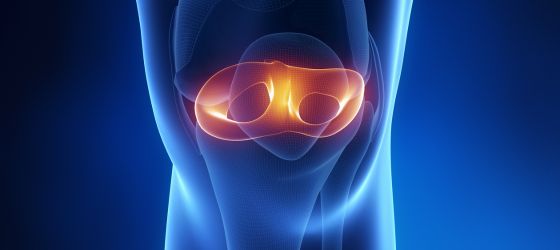
¿Se puede caminar con el menisco roto?
Sí, en muchos desgarros de menisco se puede caminar, pero depende del tipo de lesión, el dolor y la estabilidad. Las roturas pequeñas o degenerativas suelen permitir apoyo con molestias; los desgarros grandes, con bloqueo o inestabilidad, pueden impedirlo y requieren evaluación pronta.
¿Qué determina si puedes caminar?
– Tipo y ubicación del desgarro: lesiones periféricas y verticales son más estables; las radiales o de raíz alteran más la carga y pueden causar dolor e inestabilidad al caminar.
– Síntomas mecánicos: bloqueo, “enganche” o derrame importante dificultan el apoyo; si aparecen, reducir carga y consultar.
– Dolor e inflamación: muchos pacientes reducen naturalmente la carga por dolor; el derrame y rigidez son frecuentes tras desgarro.
Caminar con menisco roto y riesgos
– En desgarros degenerativos, el manejo conservador con marcha según tolerancia es habitual, evitando cuclillas y pivoteo; si el dolor aumenta al caminar, disminuir apoyo.
– Tras reparación meniscal, el protocolo de carga varía: algunas reparaciones permiten peso según tolerancia sin aumentar fallos; otras requieren no apoyar 6 semanas (por ejemplo desgarros complejos o de raíz).
– Caminar con dolor persistente puede reflejar extrusión meniscal bajo carga, asociada a síntomas; la evaluación dinámica muestra más extrusión y dolor al caminar en OA de rodilla.
En síntesis: puedes caminar si el dolor es tolerable y no hay bloqueo/inestabilidad, pero evita giros, cuclillas y correr; si hay empeoramiento del dolor, derrame marcado o bloqueo, reduce el apoyo y consulta para confirmar la lesión y ajustar el plan.
Fuentes consultadas
[1] Robert F LaPrade, Samuel G Moulton, Tyler R Cram, Andrew G Geeslin, Christopher M LaPrade, & Lars Engebretsen (2015). Meniscal Root Repairs. JBJS essential surgical techniques.
https://pubmed.ncbi.nlm.nih.gov/30405953
[2] Hannah R Popper, Brian E Fliegel, Dawn M Elliott, & Alvin W Su (2023).
Surgical Management of Traumatic Meniscus Injuries. Pathophysiology : the official journal of the International Society for Pathophysiology.
https://pubmed.ncbi.nlm.nih.gov/38133145
[3] Angela E Kedgley, Teng-Hui Saw, Neil A Segal, Ulrich N Hansen, Anthony M J Bull, & Spyros D Masouros (2019).
Predicting meniscal tear stability across knee-joint flexion using finite-element analysis. Knee surgery, sports traumatology, arthroscopy : official journal of the ESSKA.
https://pubmed.ncbi.nlm.nih.gov/30097687
[4] Sentong Wang, Kazunori Hase, Shunsuke Kita, & Shinya Ogaya (2022).
Biomechanical effects of medial meniscus radial tears on the knee joint during gait: A concurrent finite element musculoskeletal framework investigation. Frontiers in bioengineering and biotechnology.
https://pubmed.ncbi.nlm.nih.gov/36299291
[5] Mayo Clinic (2024). Torn meniscus. Mayo Clinic.
https://www.mayoclinic.org/diseases-conditions/torn-meniscus/symptoms-causes/syc-20354818
[6] Mayo Clinic (2024). Swollen knee. Mayo Clinic.
https://www.mayoclinic.org/diseases-conditions/swollen-knee/symptoms-causes/syc-20378129
[7] Jonas Bloch Thorlund, Kenneth Pihl, Nis Nissen, Uffe Jørgensen, Jakob Vium Fristed, L Stefan Lohmander, & Martin Englund (2019). Conundrum of mechanical knee symptoms: signifying feature of a meniscal tear?. British journal of sports medicine.
https://pubmed.ncbi.nlm.nih.gov/30170997
[8] Søren T Skou, Kenneth Pihl, Nis Nissen, Uffe Jørgensen, & Jonas Bloch Thorlund (2018).
Patient-reported symptoms and changes up to 1 year after meniscal surgery. Acta orthopaedica.
https://pubmed.ncbi.nlm.nih.gov/29504818
[9] Marc A. Raj, & Matthew A. Bubnis (2023).
Knee Meniscal Tears. StatPearls Publishing.
https://www.ncbi.nlm.nih.gov/books/n/statpearls/article-23936
[10] Erik Hohmann (2023).
Treatment of Degenerative Meniscus Tears. Arthroscopy : the journal of arthroscopic & related surgery : official publication of the Arthroscopy Association of North America and the International Arthroscopy Association.
https://pubmed.ncbi.nlm.nih.gov/36872031
[11] Jill K Monson, Luke V Tollefson, Christopher M LaPrade, & Robert F LaPrade (2025).
Current Rehabilitation Principles Following Meniscus Repairs. Current reviews in musculoskeletal medicine.
https://pubmed.ncbi.nlm.nih.gov/40343689
[12] Robert F LaPrade, Samuel G Moulton, Tyler R Cram, Andrew G Geeslin, Christopher M LaPrade, & Lars Engebretsen (2015). Medial and Lateral Meniscal Inside-Out Repairs. JBJS essential surgical techniques.
https://pubmed.ncbi.nlm.nih.gov/30405958
[13] Bryan Perkins, Kyle R Gronbeck, Ruixian Alexander Yue, & Marc A Tompkins (2018).
Similar failure rate in immediate post-operative weight bearing versus protected weight bearing following meniscal repair on peripheral, vertical meniscal tears. Knee surgery, sports traumatology, arthroscopy : official journal of the ESSKA.
https://pubmed.ncbi.nlm.nih.gov/28815275
[14] Anna L Falkowski, Jon A Jacobson, Mark Cresswell, Asheesh Bedi, Vivek Kalia, & Bin Zhang (2022).
Medial Meniscal Extrusion Evaluation With Weight-Bearing Ultrasound: Correlation With MR Imaging Findings and Reported Symptoms: Correlation With MR Imaging Findings and Reported Symptoms. Journal of ultrasound in medicine : official journal of the American Institute of Ultrasound in Medicine.
¿Qué síntomas da una ruptura de menisco?
¿Qué es el ligamento cruzado anterior?
Dr. Esteban Castro Contreras
Traumatólogo Cerca de Mí


5.0 ★★★★★


Contacto
Español: +523310259669
English: +523316865184
Dirección
Calderón de la Barca 29, Col. Arcos Vallarta, 44130, Guadalajara, Jalisco, Mx.
Sitios de Interés
Traumatólogo Cerca de Mi
traumatologocercademi.com